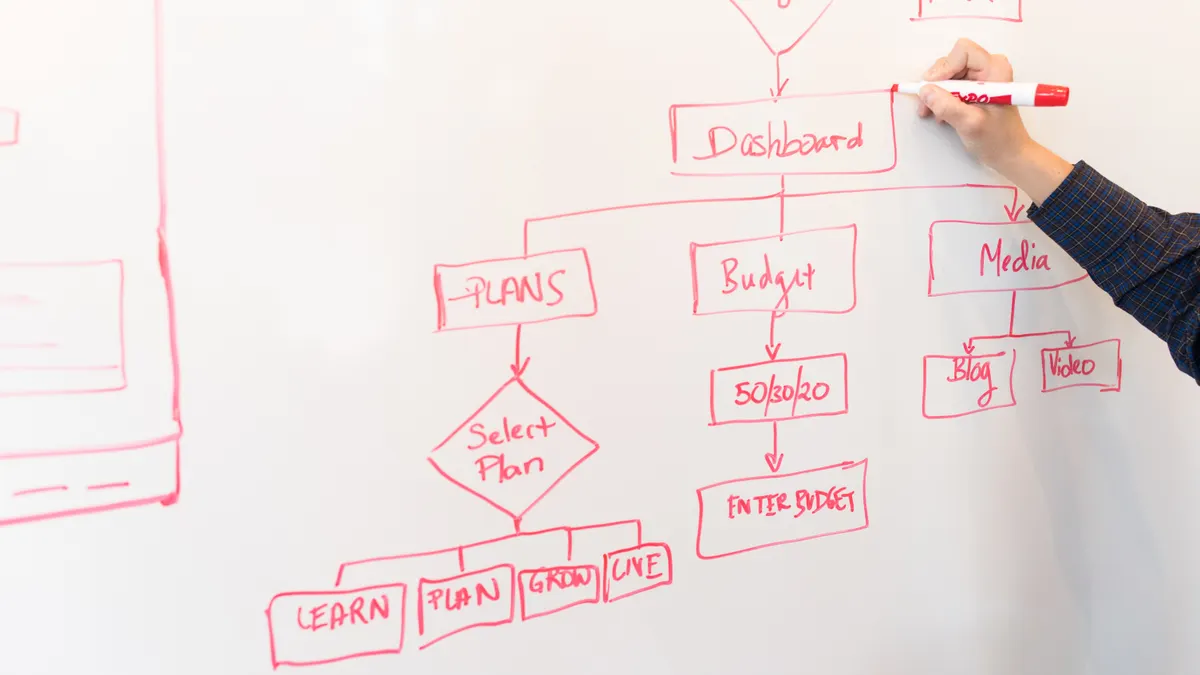
Last updated: October 26, 2026
Quick Answer: in most teams, a practical collaboration and team governance setup needs 3 layers, 4 decision buckets, and 1 clear owner per decision. In short, collaboration works when people can move quickly without asking permission for every small decision, and team governance works when those decisions still stay aligned, documented, and reversible. If a team is growing, remote, or handling work that affects customers, compliance, or handoffs, the real job in Collaboration and Team Governance: The Complete Guide is not “more collaboration” or “more control”; it is deciding who can decide what, how fast, and with what record. This guide focuses on those choices.
I write on team design, operating models, and decision systems for organizations that need fewer coordination failures and fewer meetings that end with no owner. For teams of 5 to 7 people, the decision rules are often the difference between speed and rework.
Key takeaways
- Collaboration is the motion; governance is the guardrail. A healthy team needs both.
- Most breakdowns come from vague decision rights, not lack of effort.
- Good governance is often lightweight enough to use every day and strict enough to stop drift.
- If work is creative, volatile, or cross-functional, use looser governance with clear escalation paths.
- If work is regulated, customer-facing, or irreversible, tighten approvals, records, and review points.
- The wrong model is not “too much process” in the abstract; it is process that does not match the risk of the work.
What collaboration and team governance really solve
Collaboration solves the problem of coordination. Team governance solves the problem of decision-making under shared responsibility. Those are not the same problem, and treating them as one is where many teams go wrong. If the split is unclear, it helps to consult a governance or operating-model professional and to review the Project Management Institute’s PMBOK Guide for role language and the NIST Cybersecurity Framework for a risk-and-accountability example.
A team can collaborate heavily and still fail if nobody knows who approves a scope change, who resolves a priority conflict, or who owns the final call when specialists disagree. The reverse is also true: a team can have immaculate approval chains and still fail because people stop talking early, hide uncertainty, or wait until a meeting to surface blockers.
The useful distinction is simple. Collaboration is about how people work together day to day: shared documents, review cycles, standups, async comments, pair work, and handoffs. Governance is about how the team makes and records decisions: authority, escalation, approval thresholds, meeting cadence, accountability, and exception handling.
That distinction matters more as the team grows beyond 5 to 7 people. Once work passes through multiple functions, the cost of an unclear decision rule rises fast. A designer may think a product call belongs to the product manager; the product manager may think legal must sign off; legal may assume marketing already checked it. The result is not just delay. It is duplicated work, silent risk, and resentment.
The most common mistake is to add meetings instead of clarity. A weekly sync with 10 people often feels like governance, but it is usually just broadcasting. Real governance answers three questions:
- Who decides?
- Who must be consulted?
- What happens if the decision is contested?
If a team cannot answer those in one sentence, it does not yet have governance. It has hope.
Two external references are useful here: the Project Management Institute’s PMBOK Guide for the language of roles and decision processes, and the NIST Cybersecurity Framework for a practical example of governance tied to accountability and risk. The point is not to import corporate bureaucracy. The point is to see that good systems define decisions before conflict forces them.
Why most teams confuse activity with collaboration

Most teams think they have a collaboration problem when they actually have a decision-rights problem. That confusion leads to the wrong fix: more meetings, more messaging, and more “alignment” sessions that leave the same ambiguity in place.
A team with weak collaboration usually shows visible symptoms:
- work moves slowly because people wait on each other,
- meetings repeat the same unresolved points,
- documents are edited by too many hands too late,
- questions get answered in private channels instead of where the work lives,
- and nobody trusts the latest version.
A team with weak governance often shows another pattern:
- people work hard but produce conflicting decisions,
- managers override one another,
- the same issue is revisited after every meeting,
- approvals are delayed because nobody knows the threshold,
- and someone always says, “I thought that was handled.”
The second problem is usually worse. Lack of governance creates rework that looks like collaboration failure. A team may be very chatty and still ship the wrong thing because the final call was never clearly assigned. The chatter disguises the absence of authority.
Good collaboration depends on a few concrete habits:
- shared work surfaces, not fragmented text threads,
- written decisions, not memory,
- clear owners for each deliverable,
- short feedback loops,
- and one place where priorities are visible.
Good governance depends on a few different habits:
- named decision makers,
- documented decision types,
- escalation triggers,
- review rules for riskier work,
- and a record of exceptions.
The trade-off is real. More collaboration usually means more openness and faster learning, but it can also mean more noise and more people in the loop. More governance usually means more predictability and fewer surprises, but it can also slow creative work if every choice needs sign-off.
The mistake is not choosing one side. The mistake is putting governance on top of a team that has no collaboration discipline, or expecting collaboration to substitute for authority. A team can be friendly and still be badly governed. It can also be tightly governed and emotionally brittle. Both are expensive.
How to design decision rights without killing speed
The answer is to define decision rights by risk, not by ego. The best governance model is the one that assigns decisions at the lowest level that can safely carry them.
A practical rule: if the downside of a wrong call is low and reversible, push the decision down. If the downside is high, hard to reverse, or legally sensitive, pull it up or require review. That simple distinction prevents most governance theater.
A useful structure is to classify decisions into four buckets:
- Individual decisions: one person can act alone within a clear boundary.
- Consulted decisions: one owner decides after seeking input from named roles.
- Joint decisions: two or three functions must agree before action.
- Escalated decisions: the issue goes to a manager, steering group, or executive if there is deadlock.
This is where many teams would benefit from a light RACI matrix, but only if it is used to settle real decisions. A RACI chart that nobody consults is decoration. A short decision-rights list tied to actual workflows is useful.
A good governance map usually covers at least these areas:
- priority setting,
- budget or spend approval,
- customer commitments,
- brand or legal review,
- access and security changes,
- hiring or role changes,
- and release or launch sign-off.
The key is not to make every category equally strict. For example, a content team may allow writers to publish routine updates without executive approval, but require legal review for claims, regulated topics, or external statements. A software team may let engineers merge small fixes after review, but require product and security sign-off for authentication changes.
The downside of tight decision rights is slower motion at the edges. People may feel boxed in if they need permission for too much. The downside of loose decision rights is inconsistency. One person makes a quick judgment, another makes a different one the next week, and the team learns the wrong lesson.
A good test: if three smart people can all describe the same approval process differently, the governance is not clear enough. The fix is not more policy text. It is fewer decision types and clearer triggers.
Collaboration and team governance in practice: the split that works
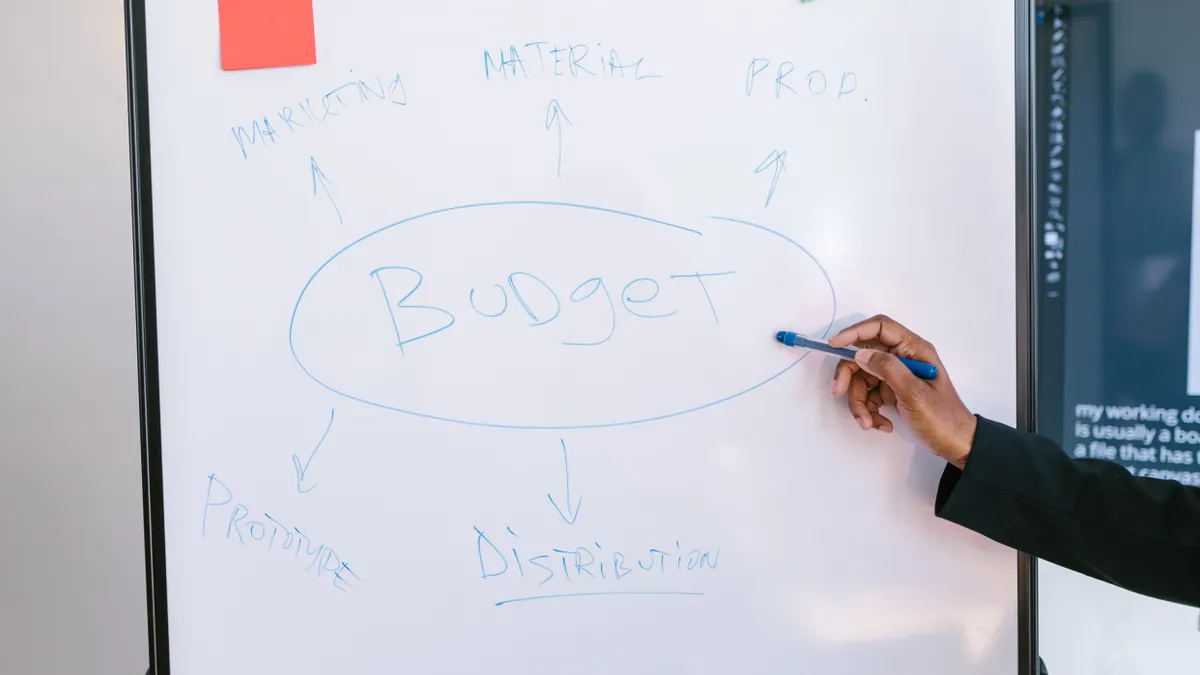
Collaboration and team governance in practice works best when collaboration is broad and governance is narrow.
That means collaboration belongs in the daily workflow. People should be free to comment, question, propose, and improve. Governance belongs in a few named checkpoints where the team must decide, document, and move on. When governance spreads into every conversation, people stop contributing honestly. When collaboration is restricted to formal meetings, the team stops learning in time.
The healthiest teams separate three layers:
- Working layer — the day-to-day coordination space where drafts, blockers, and ideas live.
- Decision layer — the place where final calls are recorded and owners are named.
- Escalation layer — the minimum path for disputes, exceptions, or higher-risk calls.
That structure works because it keeps discussion open without making every discussion a vote. It also makes dissent safer. A person can challenge a plan in the working layer without feeling like they are blocking the team forever. If disagreement remains, the decision layer resolves it and records the result.
The strongest collaboration tools are not the fanciest. They are the ones that support visible work, version history, and clear ownership. A shared document, a kanban board, or an issue tracker is often more useful than a dense meeting schedule because it leaves a trace. The record matters when teams change, people go on leave, or a customer asks why a decision was made.
The strongest governance tools are also modest:
- a one-page decision policy,
- a meeting template with explicit decision items,
- a change log,
- an approval threshold table,
- and an escalation route with names, not departments.
A team usually needs this more than a full policy manual. Large governance documents often fail because nobody can remember them under pressure. A short operating agreement survives because it is usable.
There is a cost. Narrow governance can feel impersonal if leaders use it to avoid conversation. It can also miss nuance when the team faces a novel issue that does not fit a standard category. That is why the escalation layer matters: it handles exceptions without rewriting the whole system.
Which operating model fits your team?
The right operating model depends on three things: risk, speed, and interdependence. If the work is low-risk and fast-moving, use lighter governance and heavier collaboration. If the work is high-risk or externally visible, use stronger governance and tighter checkpoints.
Here is the honest split.
Fast-moving creative or product teams
These teams usually win with fewer approvals and more peer review. Designers, writers, marketers, product squads, and research teams need room to test ideas quickly. A 30-minute approval chain can damage the work more than a small mistake would.
Where this model wins:
- rapid iteration matters,
- work is easy to revise,
- and the team needs diverse input before a final call.
Where it fails:
- too many voices can blur ownership,
- and “consensus” can turn into delay dressed up as inclusion.
Operational, regulated, or customer-risk teams
These teams need stronger governance. Finance, healthcare, security, HR, legal, procurement, and customer operations cannot afford casual decision-making. The downside of a bad call is too high.
Where this model wins:
- accuracy matters more than speed,
- compliance or auditability matters,
- and exceptions need a paper trail.
Where it fails:
- approvals can become slow,
- local teams may stop acting without permission,
- and the group can lose responsiveness if every issue escalates.
Cross-functional teams
These teams are the hardest to govern well. They need both collaboration and formal decision rules because no single function owns the whole outcome. A launch team, for example, may include product, engineering, design, marketing, legal, support, and operations.
Where this model wins:
- handoffs are complex,
- dependencies are real,
- and decisions affect multiple groups.
Where it fails:
- if the team lacks one named decision owner,
- or if each function protects its own turf.
The right move is usually to give one person clear final authority, then require consultation from the functions that carry real risk. That pattern is boring. It is also reliable.
The honest side-by-side
The right choice is not “collaboration or governance.” It is the blend that matches the cost of error. The table below shows where each model actually wins.
| Criteria | Collaboration-heavy model | Governance-heavy model | Winner for condition |
|---|---|---|---|
| Speed of day-to-day work | Faster when decisions are reversible and input is lightweight | Slower because approvals add checkpoints | Collaboration-heavy for low-risk, reversible work |
| Clarity of final decision | Can be fuzzy unless someone writes it down | Usually clear because authority is defined | Governance-heavy when the team faces disputes |
| Quality of ideas | Better when many people can contribute early | Can narrow input too soon | Collaboration-heavy for creative discovery |
| Audit trail | Often weak unless the team documents decisions consistently | Stronger because records are part of the process | Governance-heavy for regulated or reviewable work |
| Risk control | Depends on the team’s discipline and memory | Better because reviews and thresholds are explicit | Governance-heavy for high-impact decisions |
| Employee autonomy | Higher, which can improve ownership | Lower, which can frustrate experts | Collaboration-heavy for skilled, trusted teams |
| Consistency across functions | Varies unless roles are carefully aligned | More consistent across teams and shifts | Governance-heavy for multi-team operations |
| Meeting load | Can be lower if the team writes decisions well | Can become heavy if every choice needs sign-off | Collaboration-heavy when meeting fatigue is the issue |
| Handling exceptions | Flexible, but sometimes inconsistent | Controlled, but sometimes rigid | Depends on whether exceptions are common or rare |
| Best fit team size | Small to midsize teams with high trust | Larger or distributed teams with shared risk | Collaboration-heavy under 7 people; governance-heavy as complexity rises |
The table hides one uncomfortable truth: the strongest teams are rarely pure examples of either model. A mature team uses collaboration to surface information and governance to close decisions. The wrong version of each is easy to spot. Collaboration without closure becomes endless discussion. Governance without discussion becomes silent compliance.
A useful lens is reversibility. If the decision can be undone cheaply, allow more collaboration and less control. If the decision locks in cost, risk, or reputation, increase governance. That single principle cuts through a lot of managerial noise.
What most guides leave out about governance
The missing piece is emotion. Governance is not only structure; it also changes how people feel about power, trust, and fairness.
A team may understand the rules and still resist them if the rules appear arbitrary. That is why the reason behind the rule matters. If a manager says, “All customer-facing claims need legal review because one bad claim can create risk for the company,” people will accept the boundary more readily than if the rule appears to exist only because a leader prefers control.
The other missing piece is maintenance. Governance is not a one-time setup. It drifts. A rule that worked for a 6-person team may fail at 18 people. An approval threshold that made sense last quarter may now slow a launch. A decision owner who was right for one project may not be right for the next.
Teams need periodic governance reviews, not because process is fashionable, but because work changes. A quarterly or biannual review is often enough for many teams. During that review, ask:
- Which decisions keep getting escalated?
- Which approvals are nobody using?
- Which repeated arguments show a role is unclear?
- Which exceptions have become the new normal?
- Where is the record incomplete?
Another overlooked issue is shadow governance. This happens when the real rules live in private habits instead of written policy. People learn that the loudest stakeholder gets the final say, or that one manager always overrides the team. That kind of hidden system is usually worse than no system because it teaches people not to trust the official one.
The fix is transparency, not more ceremony. Make the rule visible, state the exception path, and keep the policy short enough that people can actually use it. If the operating model requires a 40-page manual, it is probably too complex for the work.
When collaboration should give way to firmer control
Collaboration should give way to firmer control when the cost of a mistake is hard to reverse, when legal or compliance exposure is real, or when repeated disagreement is causing visible delays. That is the point where flexibility stops being a virtue.
Three exception scenarios often flip the verdict:
-
A launch touches legal, finance, or customer commitments.
The team should stop treating the decision as a casual group preference. One named owner, a required review list, and a documented approval step become necessary. -
The team is distributed across time zones and keeps missing context.
Heavy collaboration becomes expensive when every answer waits for a meeting. In that case, governance with written decision logs and clear thresholds beats a free-form discussion culture. -
The team has repeated conflict over the same call.
If the same issue returns after 2 or 3 cycles, the system is wrong. The fix is usually not “more alignment.” It is assigning final authority and defining where disagreement stops. -
The work is being audited or externally reviewed.
If a regulator, client, or board may ask who approved what, informal consensus is not enough. A recorded process matters.
There is also a reverse exception: if a team has become so process-heavy that people are afraid to make ordinary calls, governance should loosen. The goal is not perfect control. The goal is the right amount of control for the risk.
The verdict: which model to choose and why
Choose collaboration-heavy governance if the team is small, trusted, and working on reversible decisions that benefit from fast feedback. Choose governance-heavy collaboration if the work carries compliance risk, customer risk, or expensive mistakes that need a clear approval trail. Neither if the team has no named decision owner, because no amount of meetings will fix a structure that never assigns authority.
That is the plain answer. Most teams need a hybrid, but the mix should not be vague. Use collaboration to widen the flow of information. Use governance to close the loop with a named decision, a record, and an escalation path. If the work is low-risk, keep governance light. If the work is high-stakes, tighten it. If the team cannot explain its decision rules in a minute, the system is not ready.
The best collaboration systems are not soft. They are clear. The best governance systems are not heavy. They are precise. A team that gets that balance right spends less time arguing about process and more time doing the work.
Drafted with AI; not yet reviewed by a person.